

I struggled a lot with financial anxiety in the past. I felt like everyone around me had it all and I was the loser, struggling living paycheck to paycheck, terrified to look at my bank statements, failing to save any money, and feeling like I would never be able to afford a good life I dreamt of.
Gradually over the years I’ve adopted financial mindset shifts, so that now I feel much more at peace with finance, and my savings are growing. These mindset shifts have nothing to do with visualisations, goal setting or abundance meditations.
Instead, they are down-to-earth common-sense principles, and they actually work! I’ve learned them all from my own experience and I hope they will help you win in your financial journey too.
- Principle #1: Stop comparing yourself to others (you don’t know what their life is really like)
- Principle #2: It’s all just stuff
- Principle #3: Figure out what you REALLY WANT.
- Principle #4: Prioritise making YOURSELF wealthy, not making corporations and other people wealthy.
- Principle #5: More than anything, you deserve feeling well.
- Principle #6: Be content with what you have and let go.
- Principle #7: Find discontentment with being broke.
- Principle #8: Lower your monthly payments.
- Principle #9: Do not let sneaky offers and financial pyramids devour your money.
- Principle #10: Don’t just force this frugal lifestyle, learn to love it.
- Final thoughts
Principle #1: Stop comparing yourself to others (you don’t know what their life is really like)
Everything seems so perfect about other people’s lives on Instagram. Nice restaurants, luxury vacations, frequent shopping sprees, maybe designer bags. It might be an influencer with a multi-million audience, your ex’s girlfriend, or an old friend from middle school – it doesn’t matter.
It hurts just as much to watch these people shine while you have your own imperfect life to deal with. Like you’re missing out on something in life, and you cannot quite grasp what to do to get to where they are.
But what these people don’t show you is the full picture of their lives. Nobody posts stories of them fighting with their spouse. Or their children whining. Or credit card bills. Or tough conversations with their boss. Or how a car payment is eating a huge chunk of their take home pay. Or how they end up with barely any money at the end of each month.
I once had a conversation with a colleague about a Bali trip that she was about to take. She was so excited to go on that 3 week vacation, mentioning she had been saving a long time for it.
Saving a long time to go on a vacation… That sounded so strange, especially from a person way more senior than me.
Even if I wanted to go to Bali, I wouldn’t need to save for such a trip for months or years (unless it was a luxury vacation with first class flights, 5 star hotels and exclusive experiences).
My expenses are quite low, I have a big enough margin between my earnings and my expenses, and I already have enough savings anyways.
As to my own vacation that summer, it was a week off with a mix of hiking, backpacking and camping with my boyfriend and our dog in the majestic huge mountains of Caucasus. Without leaving the country, in a 5 hour drive from where we live.
It did cost us about $500 eventually (gas, food, sauna, and a couple of dinners in our favourite but quite affordable restaurant in the town), and my backpacking gear collection is far from being cheap. But I didn’t need to save for that trip – just allocate a small chunk of my salary to it.
And may I say this trip was a memory for a lifetime!

Now, a totally opposite example from my life. 2 years ago I decided to fulfil my dream and spend 3 months living in the heart of Paris. I lived in a tiny Airbnb that cost me $1700 a month alone, visited museums, opera, ate Berthillon ice-cream on the Île Saint-Louis for 6 EUR a scoop, went on Tinder dates, and explored little corners of the city in my free hours.
All this could have been a nice Instagram reel (if I had Instagram) picturing a perfect life of a 27-year old.
I thought I would be living my dream, but I felt totally miserable during those 3 months (for a number of various reasons that have nothing to do with money).

You don’t know what is behind the flashy things that you see in other people’s lives. So please stop feeling less than.
Ditch Instagram for at least a month and see how it makes you feel (I haven’t been on IG for over 3 years now and it has brought so much more peace back into my life!)
When looking at other peoples’ highlights, always remember you don’t see the entire picture, and it is likely not as flashy as you think.
Focus on yourself and your life, it’s the only one you have.
Principle #2: It’s all just stuff
On one of my Paris days, I was walking through Galeries Lafayette – the luxurious place where you can buy your way into a luxury life, as I had thought.
I was looking at designer bags and all the fluff. I finally had enough spare money to treat myself into something like this – I was thinking about a 2500 EUR Yves Saint Laurent bag.

But being there and able to have what I had wanted so badly, instead of feeling an itch to own that thing (as I had for years while looking at it in other people’s Instagrams) I realised – it’s just stuff and I don’t really want this. Why would I spend 2500 EUR on a bag anyways?
The store was overcrowded with tourists wandering around. Outside of that place I had to squeeze myself through a sea of people, trying not to inhale too much stinky cigarette smoke, and doing my best to not come too close to homeless people on the nasty pavement.
That place and that stuff had absolutely nothing to do with what I really wanted.
Going through that busy and shiny luxury department store, I started feeling free. Free from wanting that overpriced stuff. Free from the need of owning that stuff.
Some things are really convenient and do bring value. A powerful reliable blender that makes cooking faster and more enjoyable. Noise-cancelling headphones that help you focus on your work. Or a comfortable mattress that ensures a healthy good night’s sleep.
But most of the things we want to own – they are JUST STUFF.
A new $50 blush palette when you already have one that looks good on your cheeks – it’s just stuff.
The latest iPhone Pro Max version when your current iPhone 13 is still reliable and functional – it’s just stuff.
A new pair of Levi’s jeans when you already have 5 – it’s just stuff.
Please stop lying to yourself. In some cases when you want to buy something – it’s convenience. But more often than not – nothing more than just stuff.
And with this realisation comes the next step…
Principle #3: Figure out what you REALLY WANT.
In most cases, you don’t want stuff, you just want to feel a certain way – you want to feel good (and you deserve to!).
When I looked at people with luxury bags, I thought they had no problems in life and had ultimate security. If they reach a point where they can buy a $3k bag, then it means everything in their lives is settled, right?
Back 3 years ago it was time for me to get a new phone. So after being ashamed of an old and broken 8 Plus, I bought an iPhone 13 Pro (at that point in time I did have money to buy it without sacrifice).
But I was not doing any blogging or anything that would require a top class camera. So why did I buy a Pro version and not a regular one? The reason was purely childish – just so that everyone can see it’s a more expensive Pro version with 3 cameras on the back and not 2 (nice way to boost revenue, Apple).
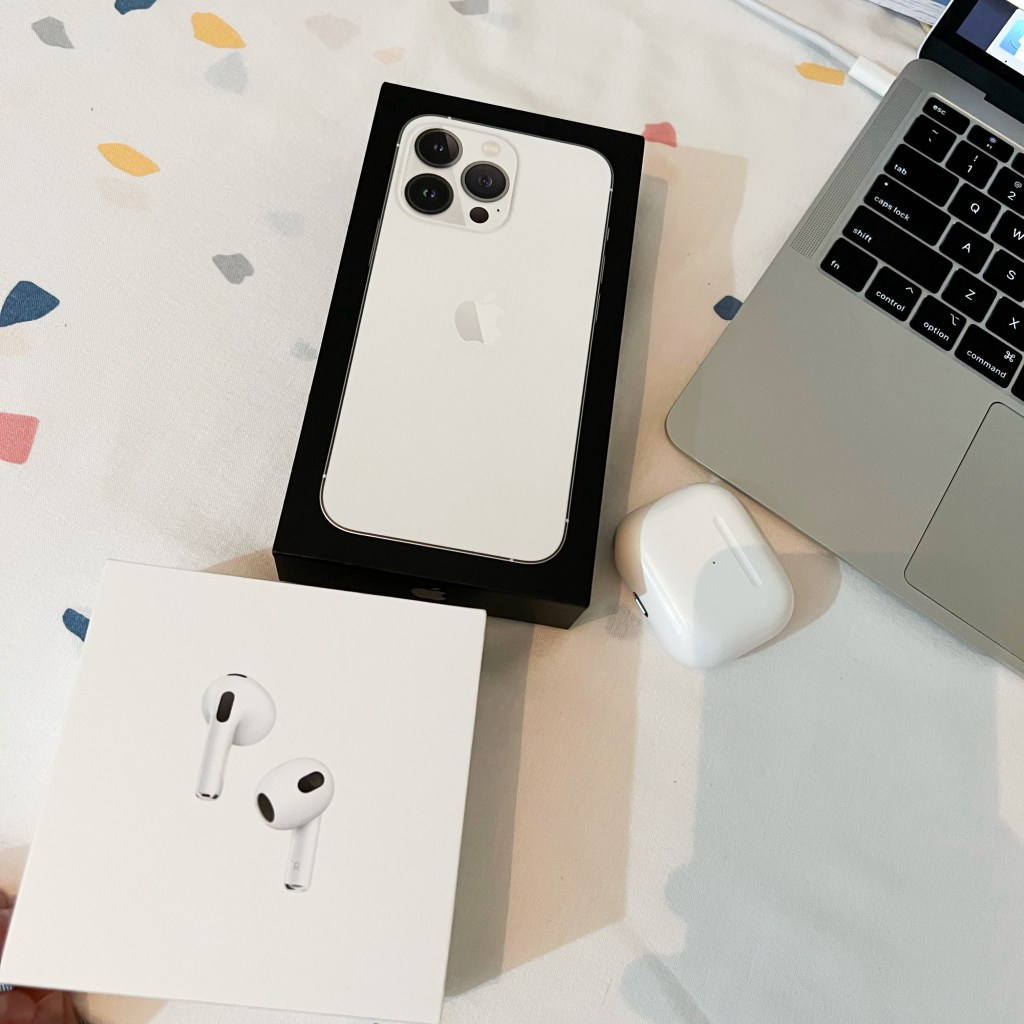
I would make sure to have it on display when I was out and about. Especially when walking into restaurants and stores. Remember – I had been sick of feeling so ashamed of that old and broken phone. Did the new iPhone Pro me make me feel more secure and worthy? No.
If you feel something scratching you from the inside when you look at the things you want, ask yourself what stands behind these wants. How do you want to live your life? What do you really want?
Generally, we want to feel calm, safe, secure, stress-free, peaceful, worthy, loved, and free.
Maybe you want extraordinary experiences, to have lots of fun, or to feel like you contribute to making the world a better place. Maybe you want respect, or to feel like you belong.
Money plays an essential role in securing many of these things, but it’s not enough. And a good life does not come from acquiring stuff. It comes, among all else, from creating financial security and spending money on things and experiences that bring you a greater ROI than a new show-off iPhone.
A good life comes from having a secure home that you own, from substantial savings and investments, from passive income and financial freedom. It comes from knowing that even in a case of a crisis, you will be fine.

If you spend your money on a pile of stuff, you will just have a pile of stuff and emptiness inside because what you thought would fulfil you turned out to be just stuff. And you deserve so much better than that. You deserve to have a good, extraordinary life.
So why mindlessly spend tons of money on stuff if it cannot give you what you really want?
You will save yourself money and regrets if you gently pursue what your heart truly longs for (the important, intangible things) instead of pursuing stuff.
Principle #4: Prioritise making YOURSELF wealthy, not making corporations and other people wealthy.
There are people around you that want to sell, upsell, downsell, and sell something to you once again. Who want to get your hard-earned and so much needed money into their pockets.
Remember, (in a vast majority of cases) corporations and other people want your money for themselves. They are not prioritising your well-being or the well-being of our planet.
So in order to achieve financial peace and save money, you need to stay on guard of your mind and of your wallet and prioritise your own well-being.
Let’s take a simple example – hair products.
Imagine some big ‘personal care’ products corporation wants you to buy their shampoo.
You wash your hair with it every two days. For some reason it becomes slightly greasy within the same day after washing. And how would you show yourself in public with greasy hair? So you start using their shampoo every day and buy a new bottle every month (generating a stable revenue for them and a stable expense for yourself).
From being washed so frequently, your hair doesn’t have its natural protection anymore, so you have to use a conditioner to hopefully make it look a little bit less dry and frizzy.
On the shampoo bottle, they of course tell you to use a conditioner from the same line they produce. You buy their conditioner, but the hair still looks frizzy, so you decide you need a hair mask. And a no-rinse hair-conditioner. And a hair oil.
You put tons of artificial stuff onto your hair and scalp and hand your money over to the corporation. You have 5 hair products on your bathroom shelf, when in reality you really need only 1.
Some people call it ‘self-care’, but I refuse to call it like that.
Personally, I’m switching to washing my hair once a week (not that difficult living in a rural area and working from home). And my hair has been getting only stronger and less greasy. And I am becoming less dependent on manufacturers, keeping my hair healthier and my expenses lower.
Corporations spend tons of money and effort to find strategies to make you buy more. To outsmart you.
If you fall for their tricks, you do good to the corporations or whoever is trying to sell you something, and do bad to yourself. You hand over your hard-earned money to them, instead of keeping it to YOURSELF and securing YOUR financial future.
Just stop it, please. It’s not that difficult to outsmart them. Just learn to say no. And every time before making a purchase, think:
- I am about to put my hard-earned dollars (euros / pounds / etc.) from my own pocket into theirs. Is this thing really worth it?
- Will it really provide much value?
- The latest iPhone in a replacement of a reliable 4 year old model will likely not bring much value.
- Can I use something I already have?
- I use vinegar and dish soap to clean my bathtub instead of buying plastic bottles of bathroom cleaners.
- Can I buy it second hand?
- Buying a $120 pair of Levi’s jeans when I can buy them second-hand for $5 is probably not a good way to spend money (and I love a good pair of Levi’s).
- Is it worth the money or is it overpriced?
- A small bottle of high-end shampoo that costs $30. Or a trinket in a home goods store that I know was produced somewhere in China for pennies. Unless it’s something I really-really need, I refuse to spend money on overpriced stuff.
Principle #5: More than anything, you deserve feeling well.
Oftentimes we mislead ourselves about what will actually make us feel good.
In case if you find yourself in a tricky position with finances, it’s not more purchases and not more experiences that will make you feel good. It’s the opposite – frugality, cutting expenses and living below your means that will bring you financial peace.
Trust me, as a person who bought a one-week vacation on an all-inclusive 5-start resort in Turkey while being broke. And took a Mercedes S Class taxi for the airport drive.
I almost zeroed out my credit card to do this. I really wanted to go of course and swim in the sea that I hadn’t seen for 2 years after the pandemic and my own financial crisis.
And eventually I looked good in my Instagram with a tan and a smile. And – bonus, my ex saw the stories of me having a good life.

But may I say it was stupid? And childish. And irresponsible.
The week flew by quickly, and then I came home with a nice tan and an ugly reality.
And at that time I was paying for someone to clean my 32 sq.m. studio apartment! And I would go out to eat a couple times a week. I am doing a facepalm gesture while writing this.
I was suffocated in the lack of finance, and I was choosing to spend money because I felt ashamed of looking broke in other people’s eyes.
Maybe I didn’t look broke, but I WAS in fact BROKE.
I had no space to breathe. I would always think about money. 24/7.
What I really needed was not a vacation and not a cleaning service, but to wake up and go full-on frugal and saving mode.
In case if you are in a similar position, whether you are paying off debt, or thinking about switching jobs, or just trying to stop living paycheck to paycheck and create more margin, remember that what you need is space to breathe. And this space is now being sucked out by unnecessary expenses.
If something that you spend money on doesn’t make you feel good – ditch it.
What you deserve is feeling safe, secure, and tranquil.
It’s not a new manicure, or a taxi drive, or a vacation that will make you feel this way.
It’s knowing that you don’t need much to have a good life. Knowing that you have savings and investments. Knowing that you can walk away from your job if your boss drives you nuts. Knowing that you have no debt payments weighing over your head.
If you struggle to make ends meet (or let’s say simply – broke), remember that being at peace with finance is much more important than how you look in other people’s eyes.
You don’t take taxi when you’re broke.
You don’t eat out when you’re broke.
You don’t buy avocados when you’re broke.
You do your own manicure and eyebrows when you’re broke.
You work even if you don’t like your job when you’re broke.
Even when you’re doing well financially, it’s a good idea to live like you’re broke to avoid lifestyle creep.
Learn delayed gratification.
Live on less than you make.
Keep the margin to yourself.
It might be uncomfortable at first.
But you will thank yourself later. And your life will be so much better than it is now.

Principle #6: Be content with what you have and let go.
Being content with what you have doesn’t mean giving up on your dreams.
It means not letting your wants (things you don’t have now) make you feel miserable.
It does get so much easier when you stop bombarding yourself with curated pictures and reels of seemingly perfect lives of other people (remember Principle #1 from above).
20 years ago there were magazines with celebrities and models, now we have Instagram and what not with influencers who seem to do so much better than we do.
Both media drive us into a comparison game, debt, discontentment, unhappiness. They make us want, crave something more. They make us spend money on things we think can bring us happiness (but they don’t).
You might want a monthly Sephora haul. Or an international trip every 3 months. Or a new high-end car.
But you likely already have all the skincare and makeup products that you really need. You can create nice experiences without spending lots of money or going somewhere far. You have a means of transportation or can afford a used reliable car.
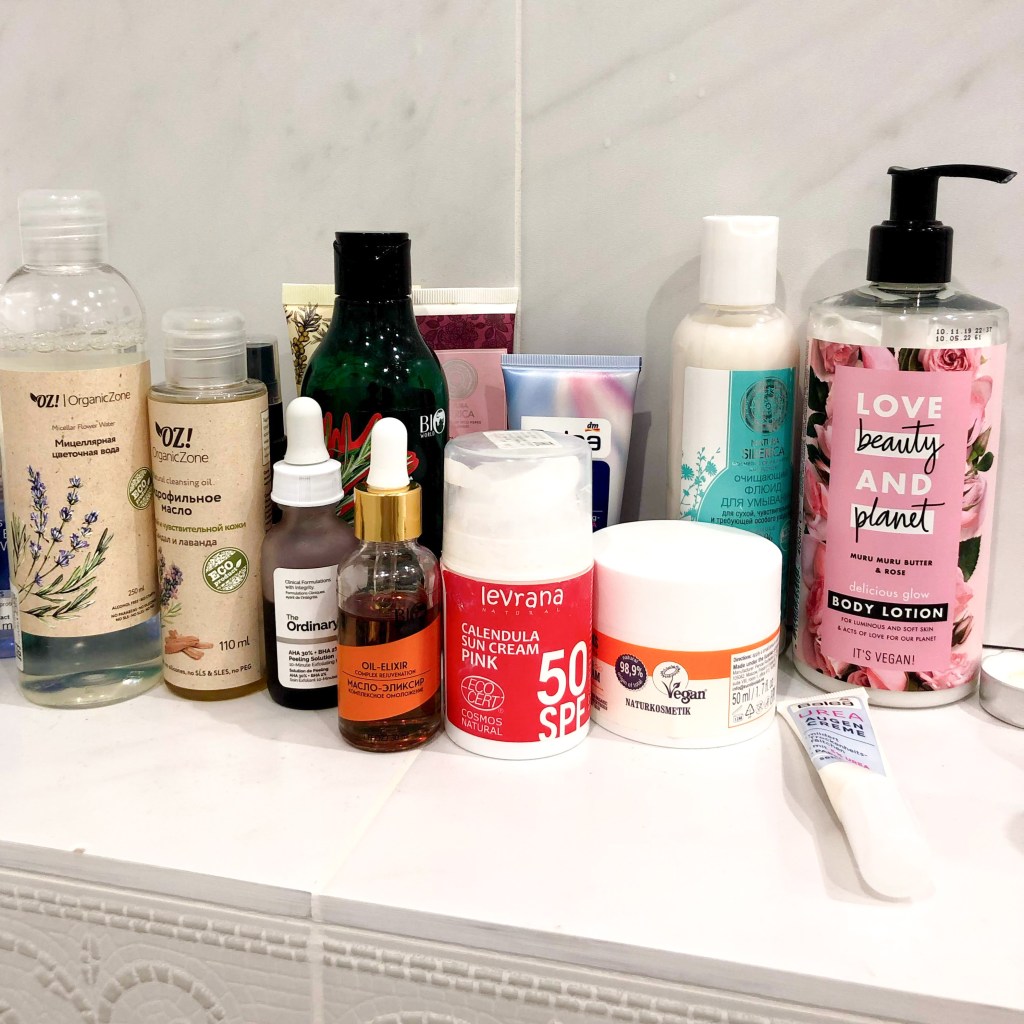
You can be content with what you have. And gradually, step-by-step you can move towards something even better.
Funnily enough, once I found contentment and let go, the Universe just gave me what I had wanted so badly (to the point that I would do visualisation meditations every morning – so obsessed and desperate I had been).
Once I became okay with living very frugally and let go of the need for a ‘luxury’ lifestyle, I got an offer for a job that was interesting enough and was paying well.
Once I became content with being single and ditched mindless dating on Tinder, I met my now boyfriend (in real life).
Whenever I really-really craved something, living with a feeling of lack, I got stressed and miserable. And I never got what I wanted.
I only got what I wanted whenever I chose to let go and be truly content with what I had.
Principle #7: Find discontentment with being broke.
I remember that overpriced home fragrance bottle I bought with the little ‘extra’ (as I thought, having a credit card debt) money from Zara Home.
The next day I realised the smell was nauseating and quite disgusting. And I had $30 less to buy myself food that month.
Was that bottle worth $30? Was it worth my anxiety and stress trying to figure out what would be the cheapest food to just provide me calories? I could have bought almost a week’s worth of very simple groceries for that money. But I chose an overpriced piece of junk.

A month later I would sit on my sofa and cry of despair. I didn’t see a way out.
I had been trying to buy my way into a good and abundant life with the money I didn’t have.
I felt miserable. I was broke. I had no money to pay my rent. I would eat rice and eggs with sunflower oil because butter was too expensive. And buying cheese was out of the question.
At that moment I realised I hated being broke more than I hated not being able to live the lifestyle of ‘abundance’.
I would have been able to stop being broke if I stopped wasting money on things I didn’t need and, most importantly, stopped wanting things I didn’t need.
Wouldn’t it be better to live a simple life where you don’t want much and feel content with what you do have? Where you don’t feel like you’re lacking something. Where you know that you can get what you want in a slow and steady way because what you want – it’s not much, it’s simple and achievable. Maybe not Instagram-worthy, but does it really matter?
Principle #8: Lower your monthly payments.
Having monthly payments is almost like having debt. Only you have somewhat more freedom to ditch this debt.
When you receive your paycheck, you know that a certain amount will go towards utilities, subscriptions, gym membership, etc. You take a certain amount of money from yourself and hand it over to someone else. Almost like paying off debt, because you HAVE to spend money on this.
It also applies to what you might consider essential things you buy on a monthly basis. Groceries of course and pet food, toiletries, cleaning supplies, period products. But what if you could completely ditch or at least lower some of these expenses?
Here in Georgia (the country on the border between Europe and Asia) we used to pay $15 a month for sub-par internet in a rental apartment, while an unlimited mobile data plan costs $10 a month. When moving to a new house, we didn’t even think about getting home internet, because why would we have a monthly payment for something that doesn’t even bring value?
I’ve recently ditched my Spotify subscription because I pay for YouTube Premium anyways and there is the same music on YouTube as on Spotify.
I don’t watch Netflix anymore.
I stopped going to the gym when the pandemic hit in 2020, and switched to free Yoga with Adriene videos, and now I also run in the mornings – completely for free.
I turn off the water heater when nobody is going to take a shower, and turn it on about 2 hours before either my boyfriend or I take a shower.
We use a DIY toothpaste that I can make for pennies, it comes without wasteful packaging and is much healthier than store-bought overpriced options.
A long time ago I ditched brand-named period products, because an o.b. tampon is just an overpriced piece of cotton. And recently I switched to reusable pads and a menstrual cup so that I don’t need to spend money at all (only when I need to replace these items some time in the future). I don’t need to go anywhere to restock period products (an additional inconvenience as I live in a rural area) or produce lots of waste every month just because I’m a woman, or depend on other people producing items to help me survive my periods.
When you know you owe little – or better nothing – to other people, and that you can survive, or even thrive on very little and with minimal dependance on others, it brings a peace of mind and freedom.
Principle #9: Do not let sneaky offers and financial pyramids devour your money.
Similar to corporations that want to get your money in exchange for at least some questionable value, there are also people who don’t mind getting your money in a fraudulent manner, through outright lies.
In total I lost about $6k in two financial pyramids between 2019 and 2023. I was talked into them by people I knew, who were much older than me and I thought had wisdom and authority. Back then, it was a substantial amount of money (remember, I was totally broke).
I thought I was investing into my future and early retirement. Which is a good intent, but I chose the wrong tools.
If someone promises to get you 20% return a month (not even a year), ask yourself: how on earth is this possible when the stock market averages about 10% a year? Because they have an army of smart financial traders making incredible profits? Let’s be realistic – it’s doubtful.
If you’re curious, I recommend watching a Netflix documentary about Bernie Madoff or Trust No One.
Funnily enough in the latter the founder of a financial pyramid unexpectedly ‘dies’ in India taking passwords to the company’s crypto wallets to his grave. One of the pyramids I fell for came to exactly the same ‘end’ a couple months after I watched the documentary.
If a story someone tells you sounds too good to be true, just stop for a moment, breathe in, and tell yourself that it is. Too good to be true. So it’s not true. Don’t let your greed or fear put your hard-earned dollars into someone else’s pocket.
Principle #10: Don’t just force this frugal lifestyle, learn to love it.
Don’t make this frugal lifestyle something that you have to force upon yourself.
If you struggle and hate it, it will not be sustainable. You will not be able to stick to it for a long time. And this is a lifestyle for the lifetime. The lifestyle of freedom. Where you have margin and space to breathe.
Listen to Dave Ramsey and people who preach similar principles. Immerse yourself in this mindset to the point when coming into a shopping mall feels like a weird experience. To the point when hearing the phrase ‘good debt’ makes you cringe.
If you’re in a tough situation, accept that this is just a season of life.
If you’re working on getting out of debt, building an emergency fund, or just adjusting your income and expenses to have more margin, and if it feels hard, just remember – it’s just for a season.
It will get better as long as you are making steps towards your goal every day. Even if there are some setbacks, stay on track, and you will come there, and it will be the next season – a better and more enjoyable one.
Don’t get too attached to the result. Find contentment with what you have. Enjoy the now as it is – imperfect and maybe a bit uncomfortable. Be graceful to yourself and give yourself rest when you need it.
As Dave Ramsey says: Live now like no one else, so that later you can live like no one else.
Final thoughts
Saving money doesn’t have to be hard. Navigating around the people and corporations who want to get your money, and keeping it to yourself doesn’t have to feel like a battle against the world.
Find contentment with the things you have. Find discontentment with being broke and making other people wealthy instead of making yourself wealthy.
At first this frugal lifestyle might seem uncomfortable, but the more you get used to this, the more you reap the benefits like peace of mind and freedom, the more it becomes second nature, and getting back to the old ways becomes out of the question.
Understand and stick to your values. You will find peace, a growing bank account, a margin for YOUR goals and YOUR future.
 Sunset Hush Home
Leave a comment