

This post may contain affiliate links, including Temu affiliate links. If you make a purchase through one of these links, I may earn a small commission at no extra cost to you.
- Why you will love this recipe
- Ingredients
- Cooking process / How to make sourdough banana pancakes
- Tips for best results
- Storage
- FAQs
These sourdough banana pancakes are naturally sweet, moist, and irresistibly soft – the kind that melt in your mouth, leaving a mellow sourdough tang and banana flavour.
They are easy to make from scratch. If you have sourdough starter in the fridge, a cup of milk, two bananas and a couple of basic pantry ingredients, you can quickly whip them up – the hands-on process is minimal.
Bananas make this recipe available all year round. And fermentation brings out all the goodness of grains, accompanied by the sweet and tangy sourdough flavour.
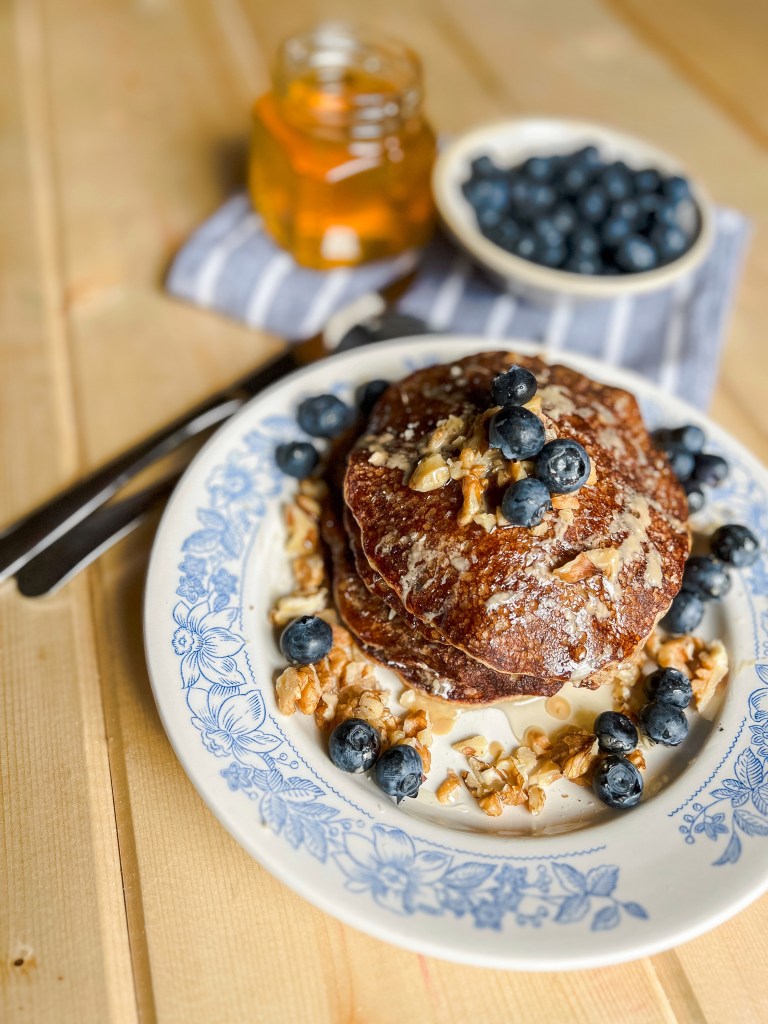
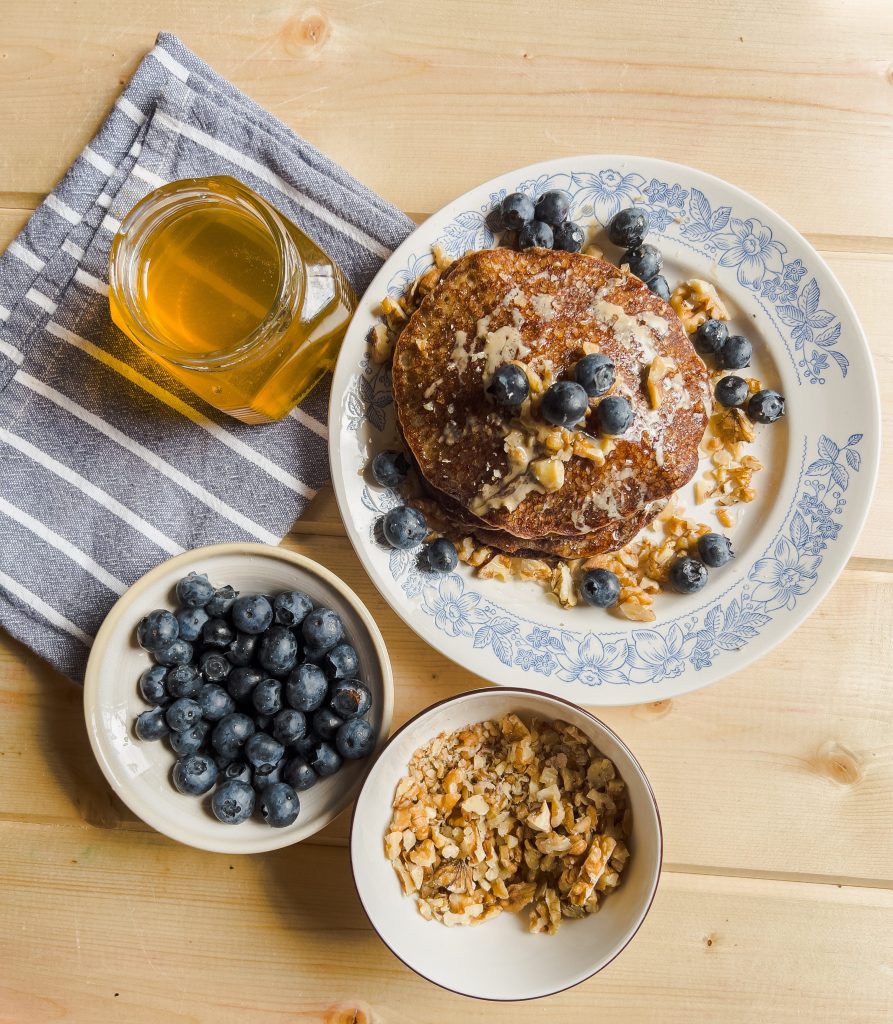
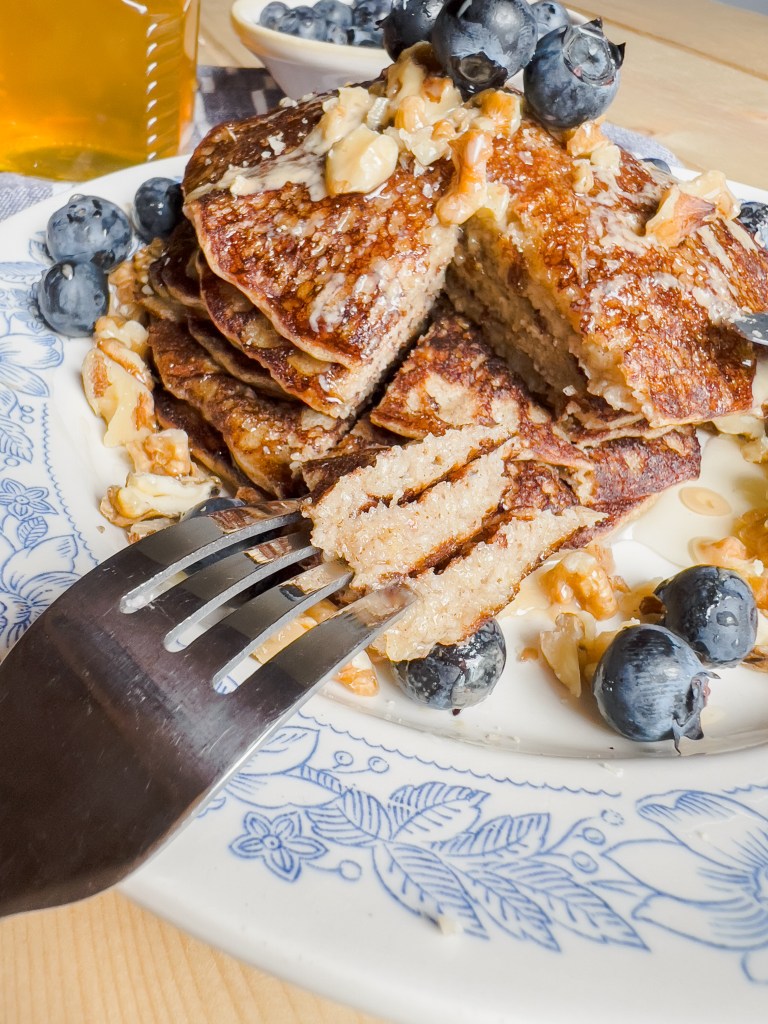
Enjoy them on slow and cozy weekend mornings, along with a cup of coffee. Top them with something sweet like honey, something crunchy like crushed walnuts, and something fresh like blueberries. I like adding a drizzle of tahini for an additional nutty note – so good!
Looking for good weekend breakfast ideas? Try this nourishing twist on classic pancakes, and it might become your favourite.
Why you will love this recipe
- Moist and soft – The right proportion of flour and liquid, as well as ripe bananas make these pancakes extra moist (not a chance for crumbly or dry pancakes!).
- The surface pattern – It’s such a fun activity flipping the pancakes and checking the beautiful and unique pattern that each pancake has. You can only achieve this with sourdough (or yeast), never with the regular pancakes made with baking powder.
- Sourdough flavour – Growing up in Belarus, I remember that smell and taste of yeast pancakes that we were served on a rare occasion in the kindergarten. Thick, fluffy, covered with strawberry jam – they were delicious! I was not a fan of kindergarden (to say the least), but those pancakes were one of the very few things I liked about being there. Sourdough does bring out the slight yeast flavour, while being a much healthier option and so much better for digestion.
- Healthy breakfast – These pancakes have extra protein, with 2 eggs per cup of flour unlike conventional pancakes that have 1 egg per cup of flour. Bananas are loaded with potassium and bring natural sweetness without you having to add any sugar. They are so good for you, while tasting pretty indulgent.
- Come together easily in the morning – Perfect for lazy weekend mornings. Just smash bananas, add a couple of eggs and mix them into the already prepared batter from the evening.
Ingredients
The measurements below yield 2 adult portions.
On the evening before you will need:
- 2 tablespoons sourdough starter (pancake batter consistency, i.e. 1:1 volume ratio of flour to water)
- 1 cup flour (I use a mix of equal parts rye + wheat + cornmeal)
- 3/4 cup milk

In the morning you will additionally need:
- Fermented dough prepared in the evening
- 2 eggs
- 2 (very) ripe bananas
- 1 tablespoon of vegetable oil (e.g. sunflower or avocado oil)
- 1/4 teaspoon baking soda
- 1/4 teaspoon salt
- 1 teaspoon cinnamon

More on the ingredients
Sourdough starter
I like to activate my starter before making the pancakes (i.e. feeding it a couple of hours before I mix the batter in the evening).
I use the starter that has the same as the final batter. I.e. I mix 1 part of flour to 1 part of water (by volume, which equals approximately 1 part of flour to 2 parts of water by weight) and a dash of my sourdough starter.
Bananas
As in the vast majority of banana dessert recipes, use ripe bananas with brown peel for maximum flavour and natural sweetness. In case if your bananas are not ripe enough or you just want to make completely sure the pancakes will be sweet enough, you can add 1 tablespoon of sugar to the batter.
Flour
You can go with 100% all-purpose flour or experiment with various types and mixes here. I use 1/3 cup of all-purpose wheat flour, 1/3 cup of rye flour and 1/3 cup of cornmeal.
Milk
Milk tends to bring out mild sweet flavours with sourdough, giving it something decadent, something that reminds me of the childhood.
I tried substituting it with whey (as we have lots of it from cheesemaking), but it gives a sharp-ish slightly acidic flavour, so I do not recommend it.
Oil or melted butter
Adding a little bit of fat to the dough provides a richer taste and texture, while also helping the skillet do its non-stick job.
Baking soda
You can use baking soda instead of baking powder, because it will react with the acid produced by fermentation. However, it doesn’t mean we can safely throw in whatever amount of baking soda just because we have sourdough. Use 1/4 teaspoon to make sure it’s fully neutralised, to avoid any residue soda flavour.
Salt
Adding a little bit of salt to desserts is essential as it makes all the flavours truly shine.
Cinnamon
Cinnamon works great with fruity desserts. Feel free to also add vanilla, nutmeg, or a tiny pinch of cardamom.
Equipment that I recommend
- Danish dough whisk for mixing batter.
- A regular whisk will not be able to handle the thick batter. You can use a handheld mixer though. Personally, I’ve recently started to appreciate how easy it is to mix thicker dough or batter with a danish dough whisk by hand, without need to take out a much bulkier electric mixer.
- Immersion blender for mashing bananas and eggs together.
- 1/4 cup measuring cup for pouring the batter onto the pan.
- It’s easier to get uniformly sized pancakes and it’s just handier than spooning out batter several times with a smaller tablespoon.
- Cast iron skillet.
- I never ever want to switch to non-stick pans again. But that’s a topic for another post!
- Big pancake spatula.
- The spatula should have a large enough surface, so that you can lift up the entire pancake, without edges hanging and risking ruining the pancake.
Toppings
Use any pancake toppings use like. Here are my suggestions:
- Chopped toasted walnuts (or any other nuts, here in Georgia walnuts are a big part of the national cuisine, so we use them a lot)
- Honey
- Jam
- Blueberries
- Banana slices
- Greek yoghurt
- Tahini
- Almond butter


Cooking process / How to make sourdough banana pancakes
On the evening before cooking
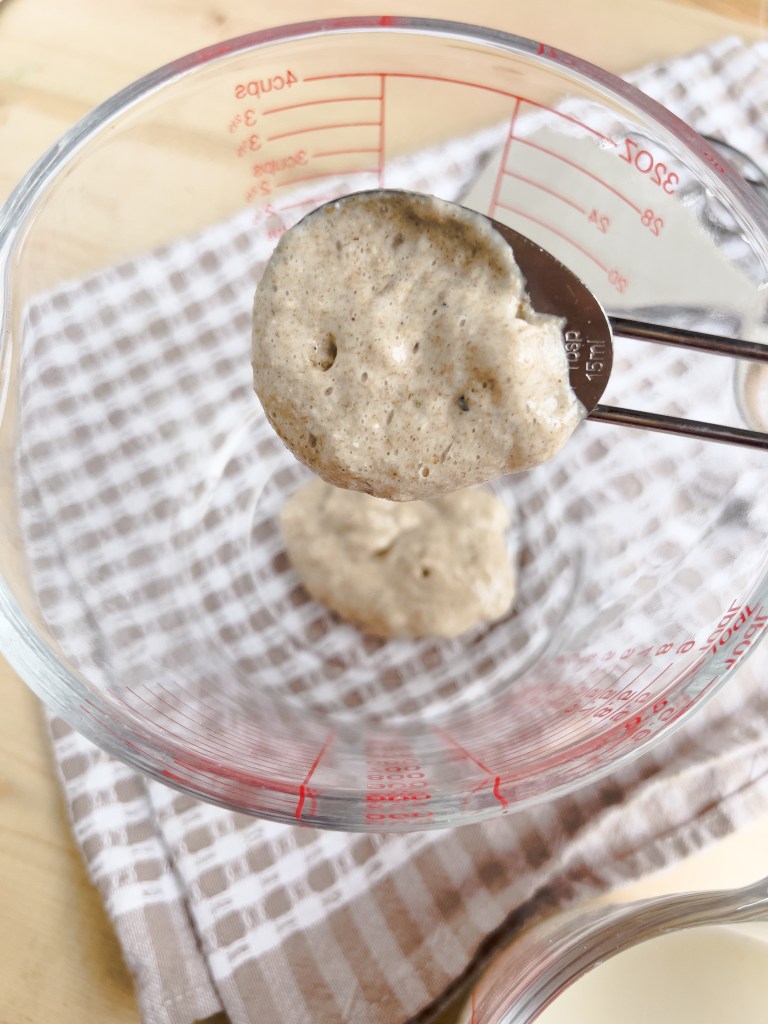
- Scoop 2 tablespoons of sourdough starter into a mixing bowl (the one you will eventually use for the entire batch of batter).
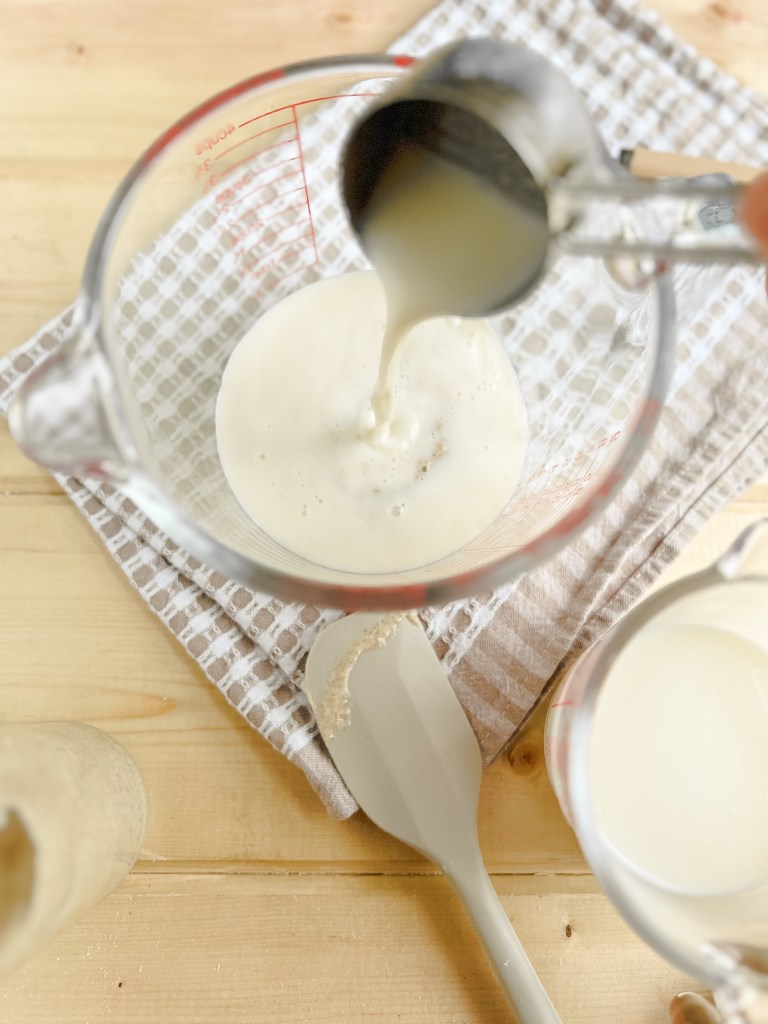
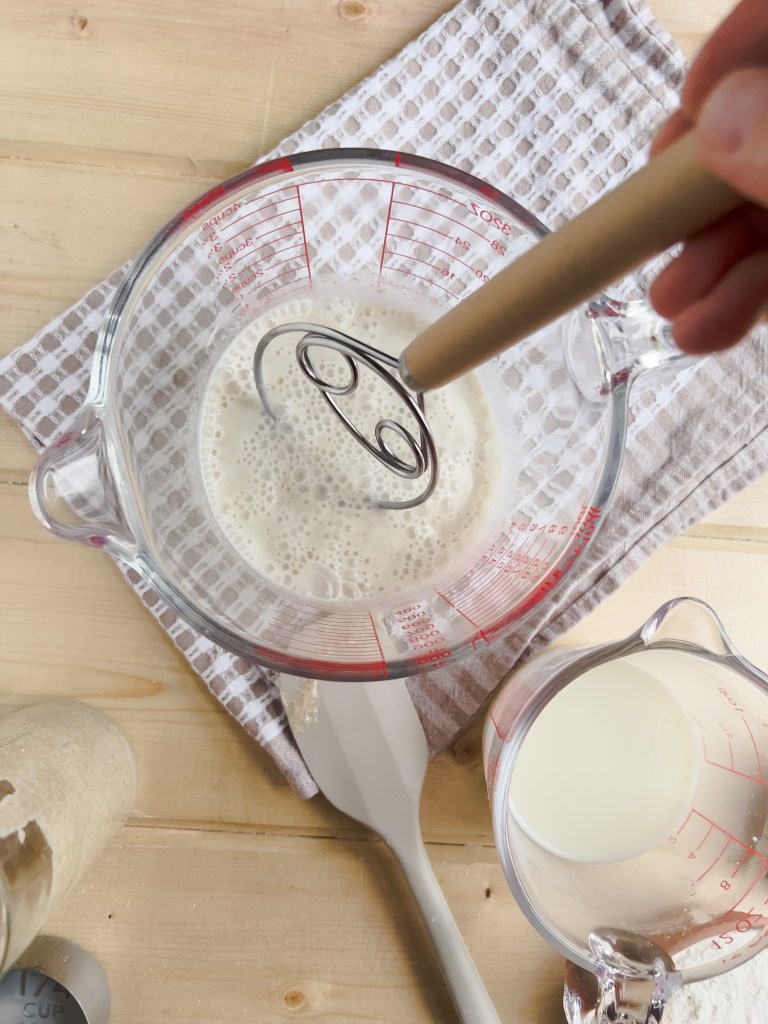
- Add 3/4 cup of milk to the sourdough starter and combine using a dough whisk.
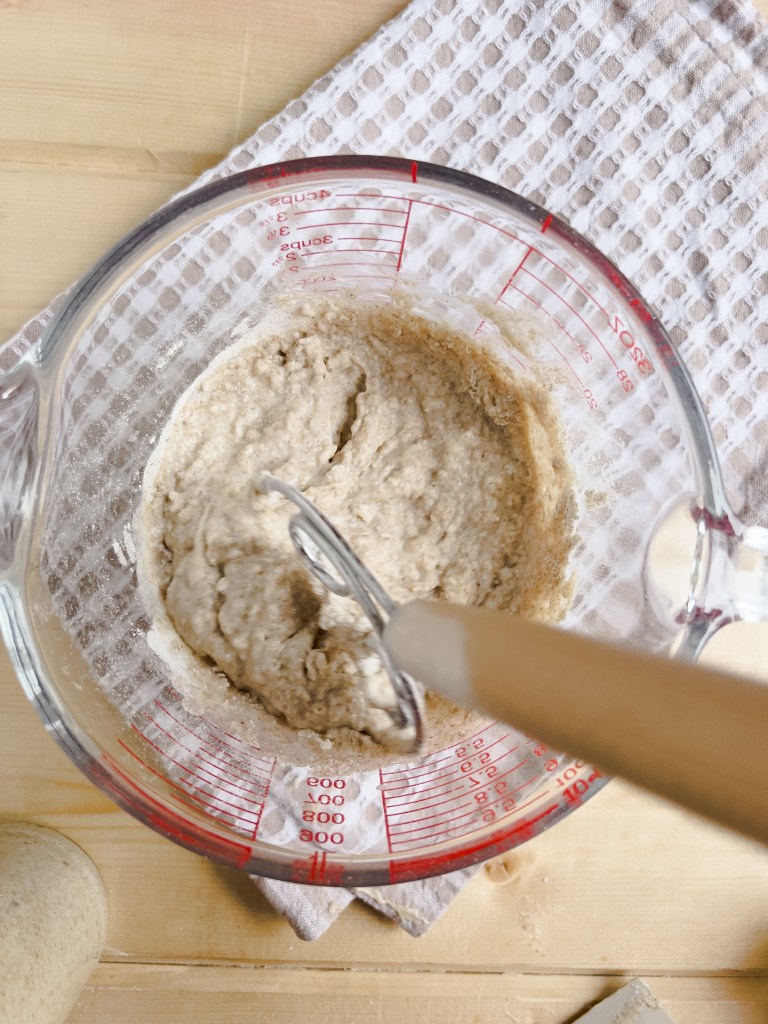
- Add 1 cup of flour or a flour mix of your choice and combine everything together. Mix the batter until there is no dry flour left and stop. It will likely be clumpy. Do not overwork the batter, as it will make the pancakes dense and crumbly.
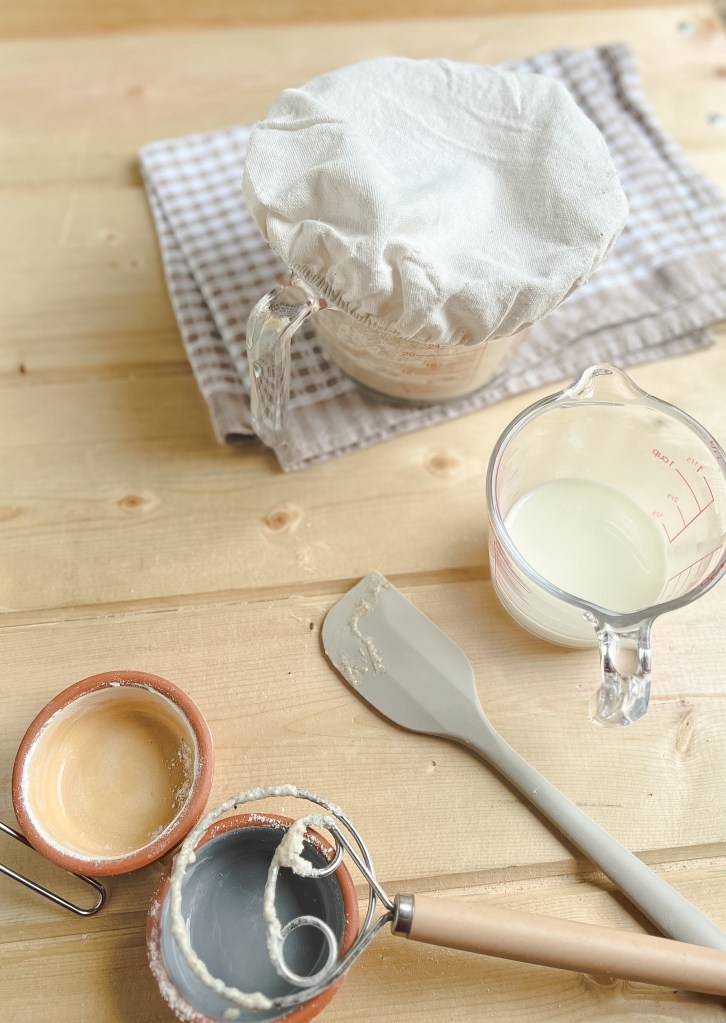
- Cover the bowl and set aside for 10-12 hours for fermentation, ideally in a warm spot of 20-24°C.

In the morning
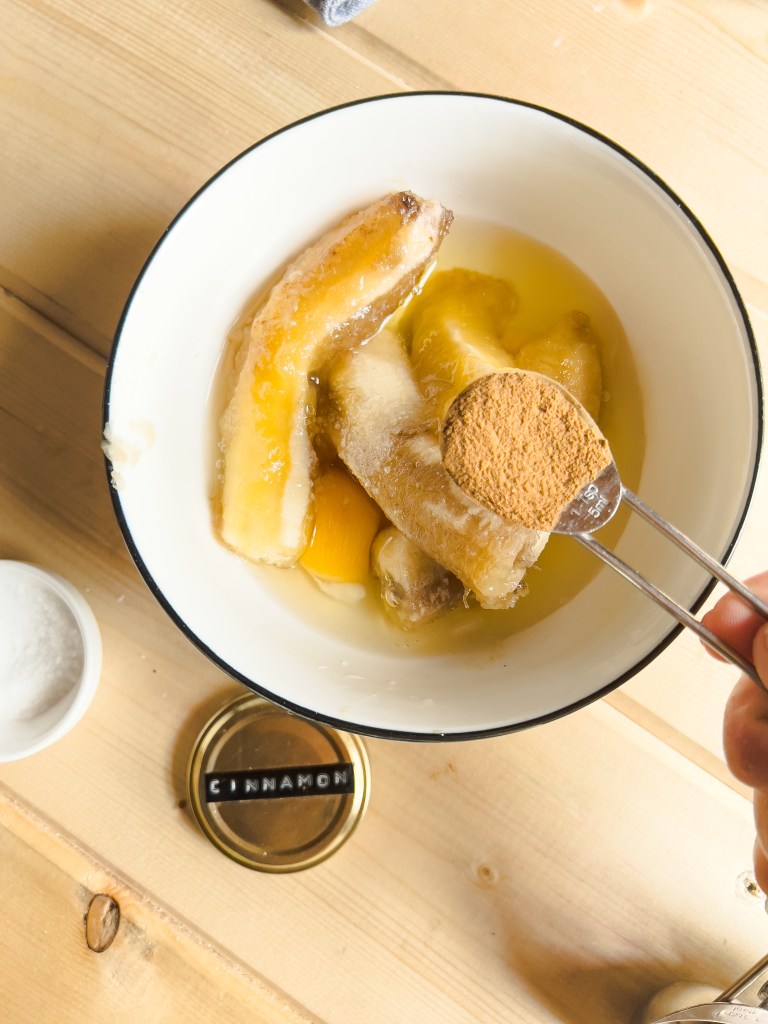
- In a new bowl, break 2 bananas into pieces, add 2 eggs, 1 teaspoon of oil, 1/4 teaspoon baking powder, 1/4 teaspoon salt and 1 teaspoon of cinnamon. Combine with an immersion blender until smooth (instead, you can use a fork to smash bananas, and a whisk to combine everything by hand).
- Pour the mixture into the fermented batter from the evening, mix until combined, but do not overwork it.
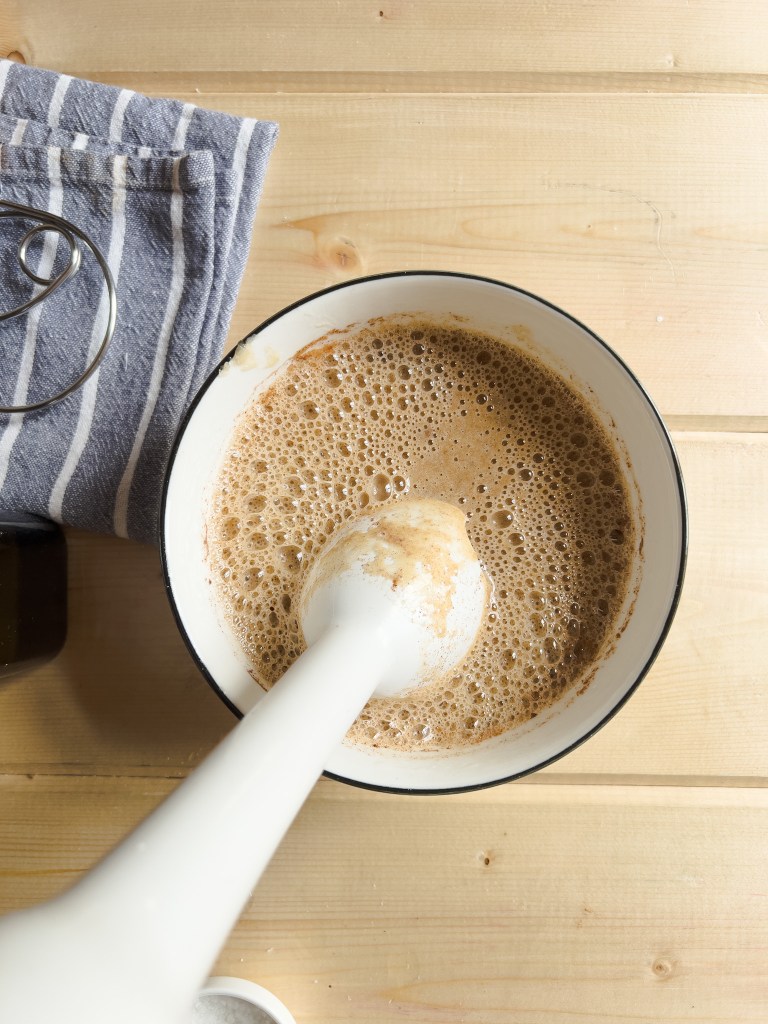
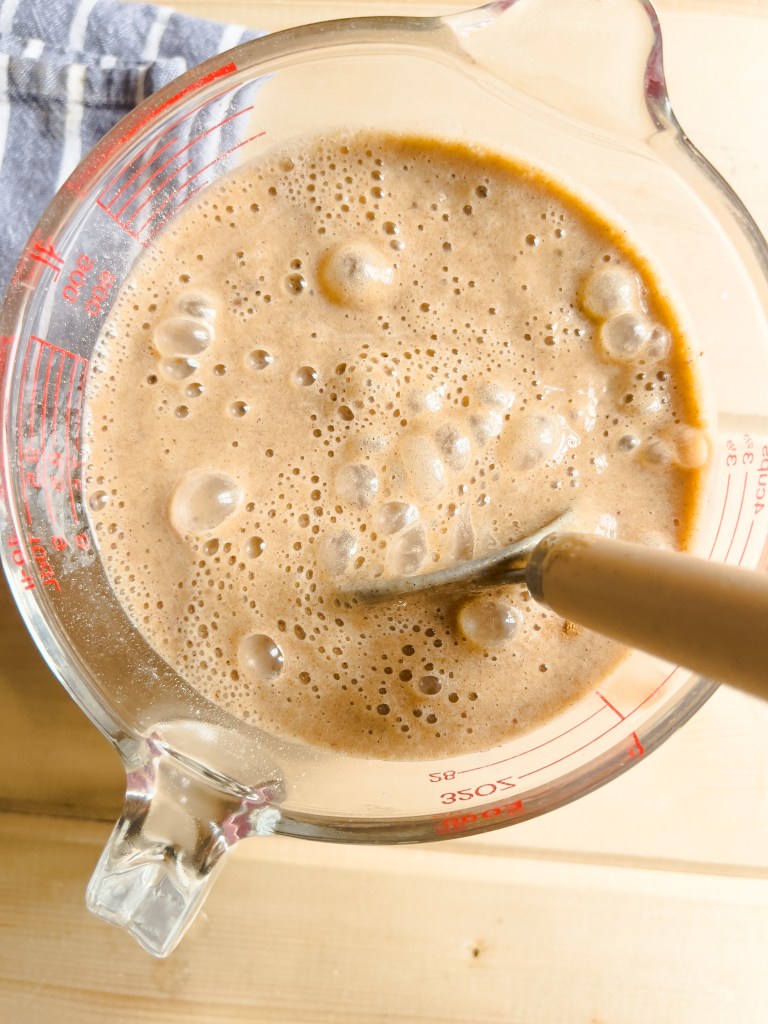
- Put a cast iron skillet on a medium high heat and brush it with oil.
- When the skillet is hot, pour 1/4 cup of batter.
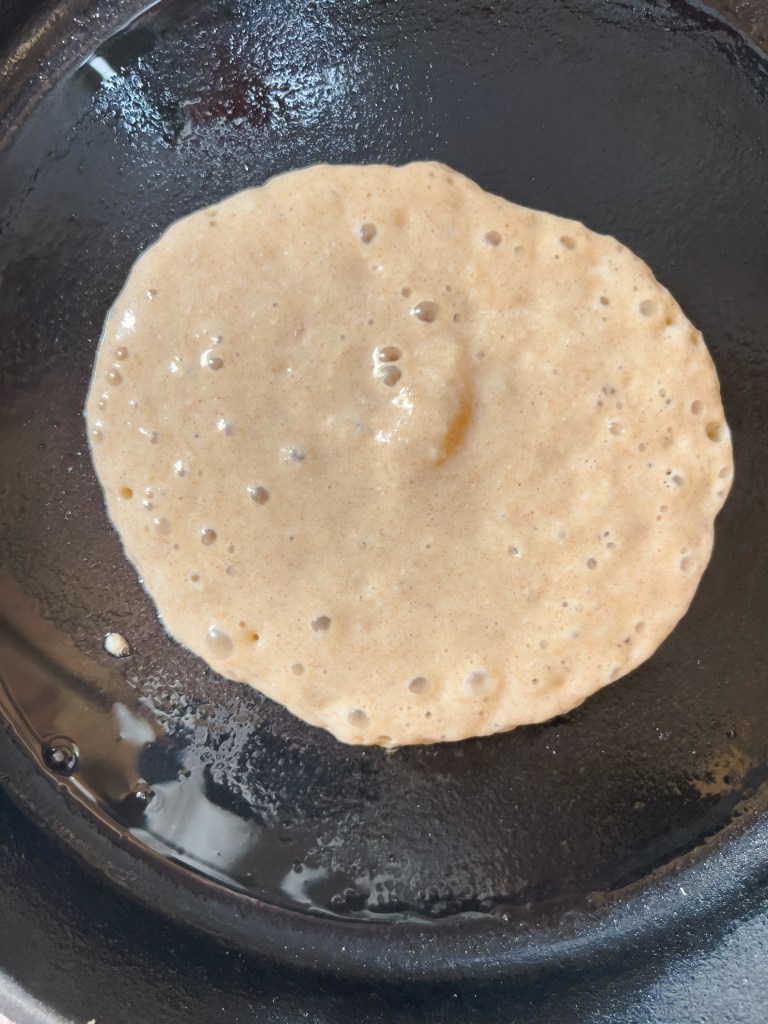
- When the pancake surface is fully covered with bubbles, gently put a pancake spatula under it and flip. You might want to adjust the heat or the time when you flip it to reach the desired colour on the surface, depending on whether you like your pancakes lighter or darker.
- Cook it on the second side for a couple of minutes (you will see water evaporating). Gently lift one side to check if the pancake has the desired colour. When done, lift it from the skillet with a spatula and transfer onto a plate.
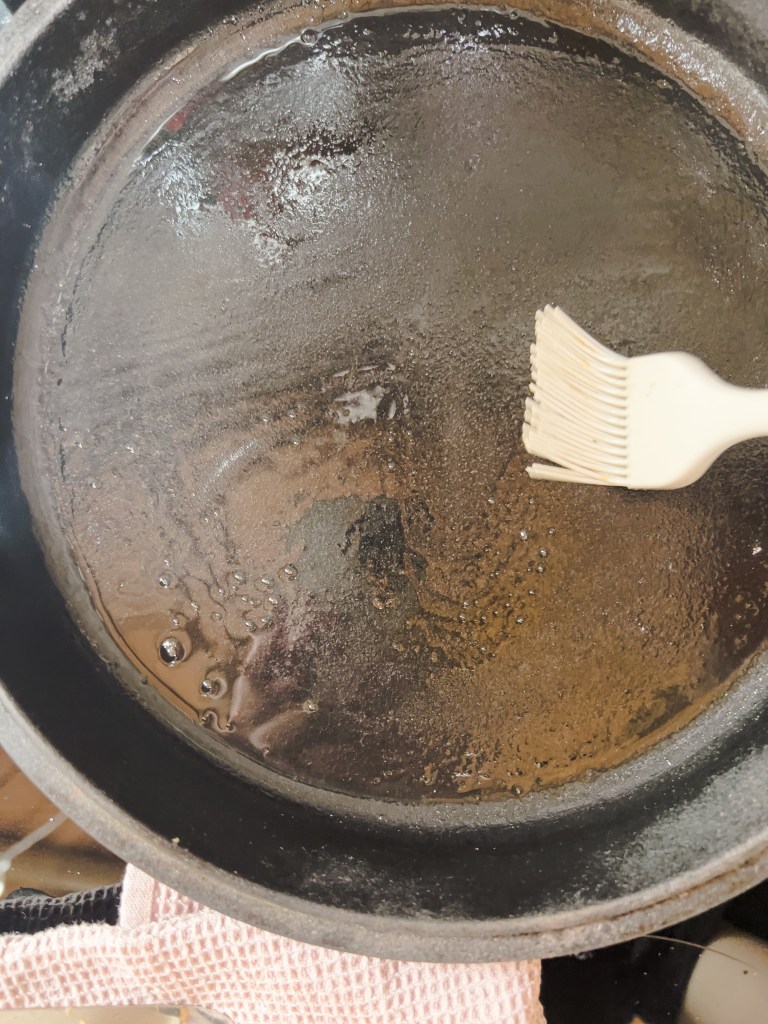
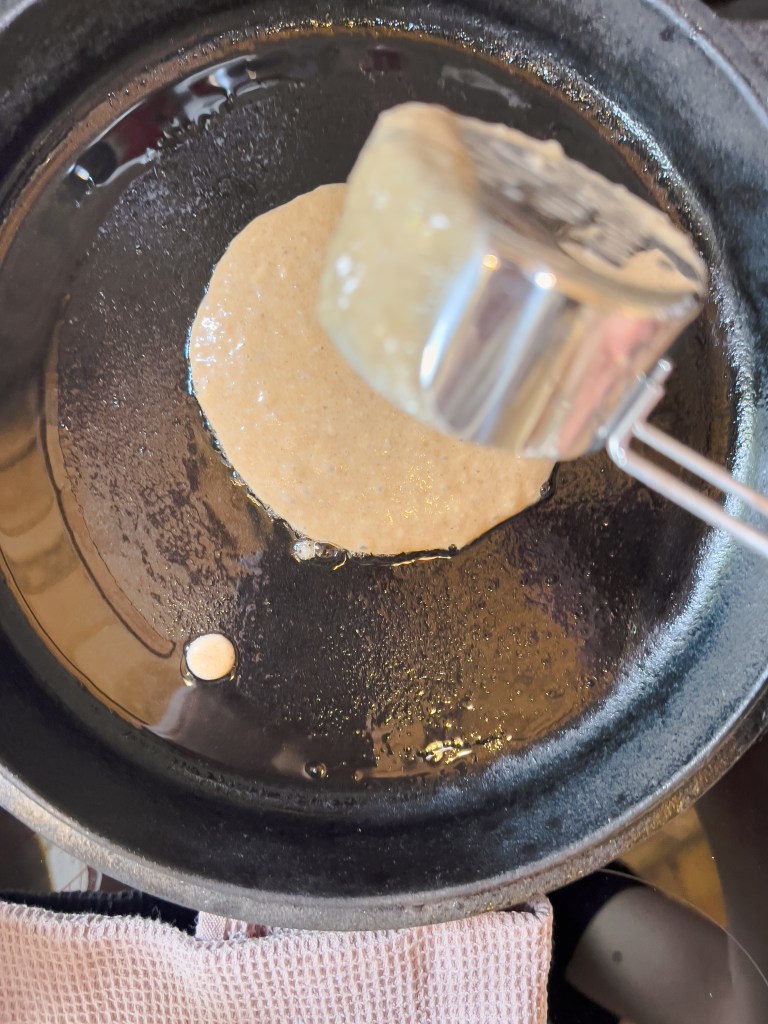

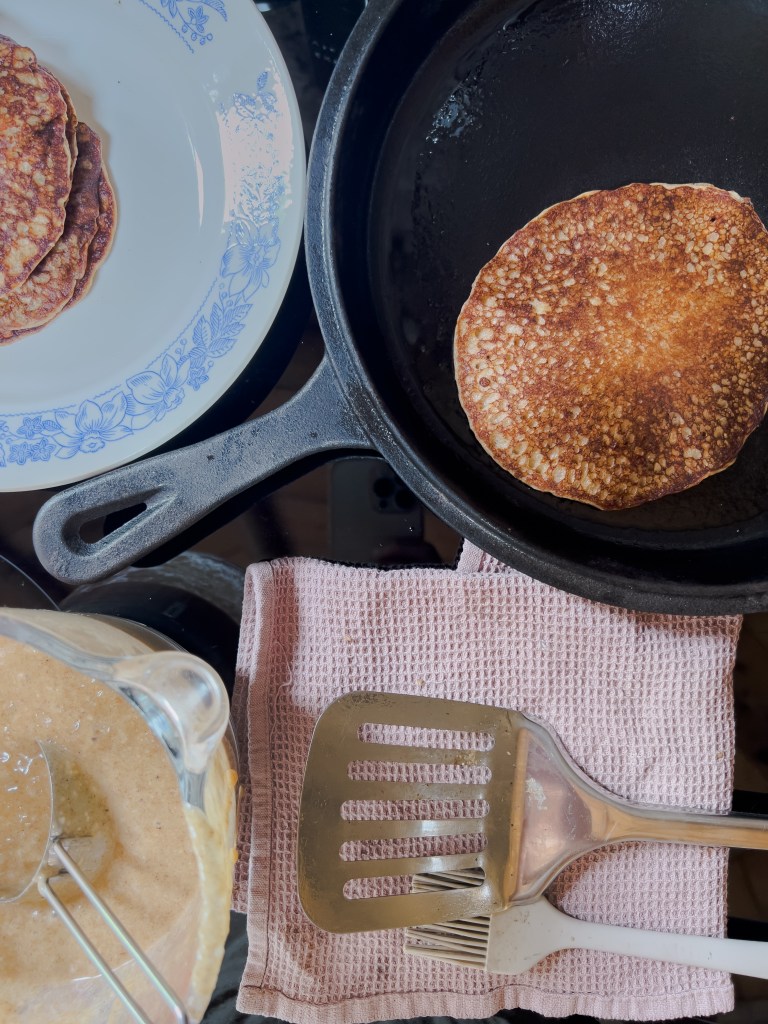
- Brush the oil from the sides of the pan back into the centre, and continue with another batch of batter.
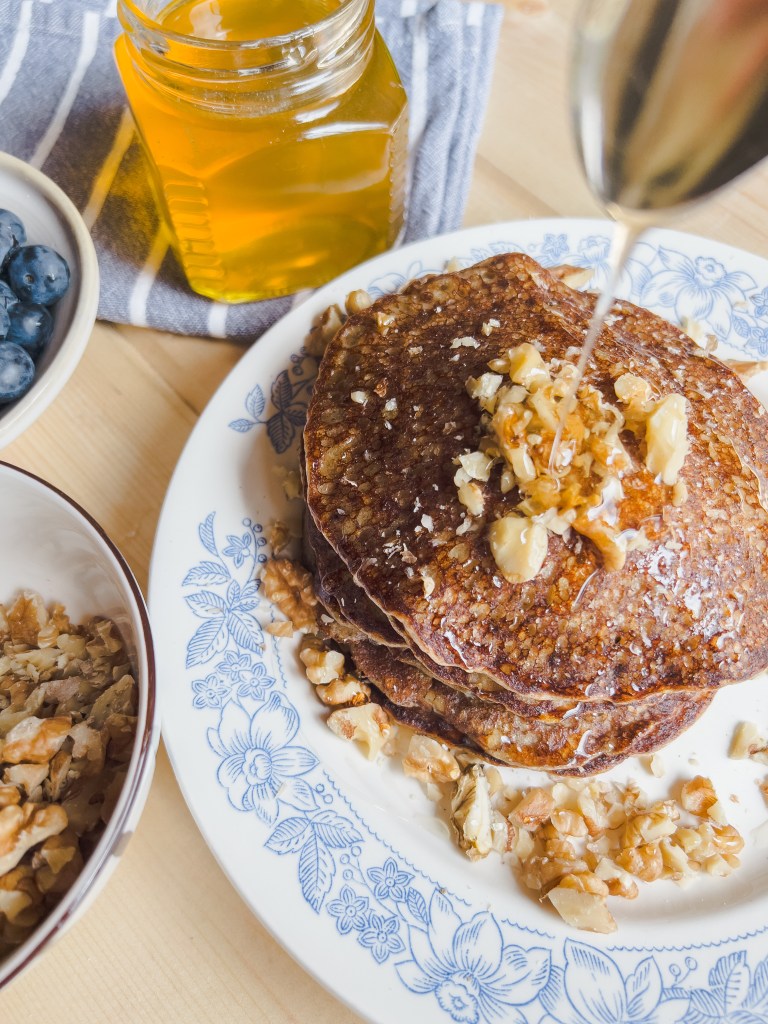
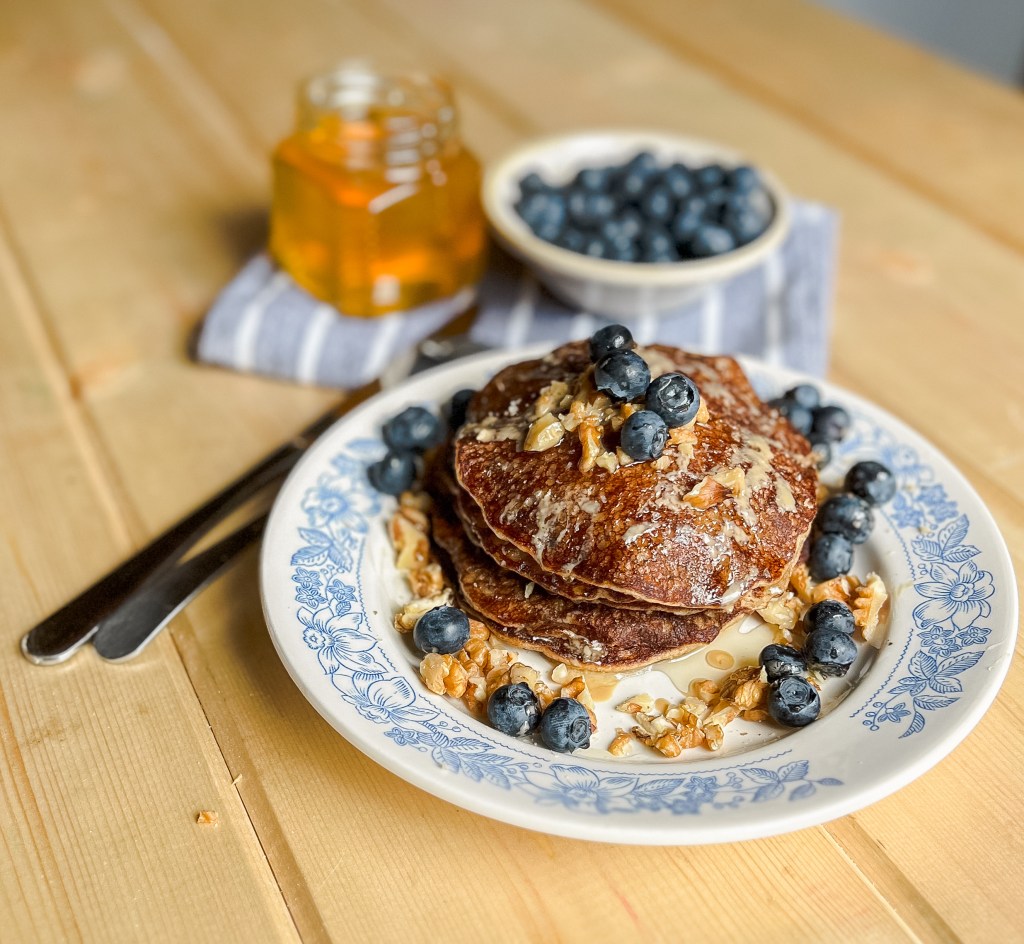
- Stack the pancakes into a small tower and top with your favourite toppings. Enjoy!
Tips for best results
- When making pancakes, it might be tricky to find the right level of heat to make sure the batter cooks through, that they are easy to flip without splattering the batter all around the skillet, but at the same time remain nice and golden instead of overcooking to dark brown colour or getting charred. Your first few pancakes might turn out not quite right. But with some practice you will get a feel for it, and finding the sweet spot of heat and cooking time will become easy.
- Make sure your cast iron skillet is thoroughly covered with oil. I pour a bit of oil before the first batch and brush it over the entire skillet. It does collect at the edge of the skillet, so after transferring a pancake that is ready I just brush the oil back to the middle, and pour the next batch of batter.
- Do not over-mix the batter. Both when mixing flour with sourdough starter and when mixing the fermented batter with eggs and banana, gently fold in the ingredients. The batter must look a little clumpy and uneven. If it gets too smooth, the pancakes will a have a dense texture – not the softness and fluff that we want.
Storage
These pancakes are better enjoyed fresh from the skillet, but if we have leftovers (which is rare), I just put them in the fridge and finish them as a sweet afternoon snack.
FAQs
Will baking soda leave a taste?
Baking powder contains dry acid that reacts with the soda when mixed with water. But because we use sourdough, we already have acid that will react with baking soda. So we can safely just use baking soda – it will be neutralised, leaving carbon dioxide that will give an additional fluff.
Make sure to not add too much soda though. 1/4 teaspoon for this recipe is the sweet spot.
Can I use sourdough discard?
There are lots of recipes over the internet where people just say “use 2 cup of sourdough discard”. But everybody’s discard has a different water to flour ratios – some are quite runny, some are stiffer, so the texture of the pancakes will be different with different discards.
Moreover, milk plays an important role in providing flavour, so milk should be the base liquid in the pancakes, not water.
However, you can use sourdough discard straight from the fridge instead of activating it beforehand. Just mix it with flour and milk, and yeast and bacteria will do their job at fermenting the batter. Maybe not as quickly and thoroughly as an active starter could, but it will still work. After all, we are making simple pancakes and not bread.
Will they lack sweetness without sugar?
I find that adding sugar in the recipe makes the pancakes way too sweet.
Make sure to use very ripe bananas and add toppings like jam or honey if you want more sweetness.
Can I substitute milk with something else?
I tried these pancakes with whey (because we make cheese and have lots of leftover whey). They turn out more sour-y and less mild.
Water won’t give that sweet flavour either.
Milk brings out a really soft and sweet flavour – so do use milk.
Let me know in the comments if you try these pancakes, and I’d like to see your photos!

 Sunset Hush Home
Leave a comment